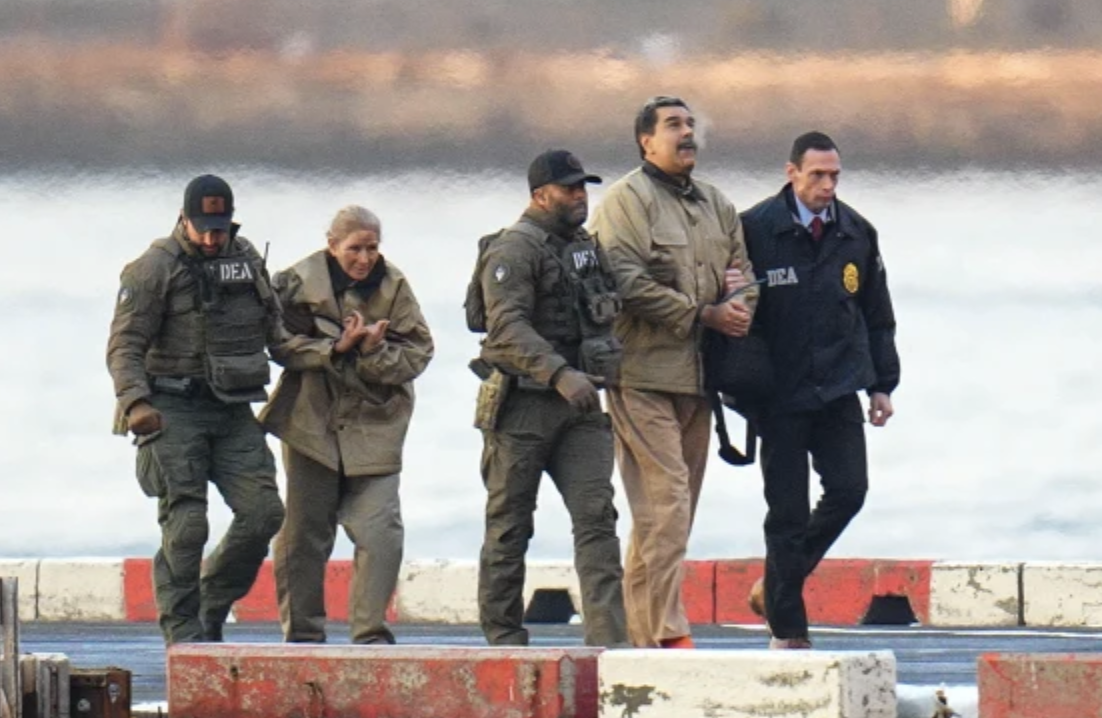
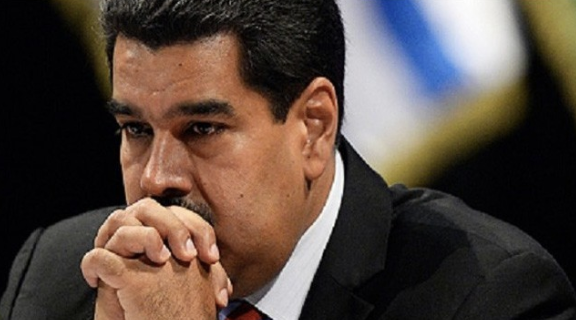




























Venezuela’s “President” Maduro has been undergoing extreme pressure from foreign and internal issues, with individuals like Maria Cochado beginning small-scale uprisings and Trump controlling the waters near the country. Due to Venezuela’s history of tumultuous records and difficult foreign relations, the entire world awaits with bated breath for the future.
However, to understand the pervasive issues, one must look back in time. In 1922, Venezuela struck it rich, finding millions of dollars worth of oil within the fields of the Maracaibo Basin, with the production of oil exploding, multiplying by 100 fold in just eight years. The oil-hungry consumer of America hoped to create a significant relationship and partnership, which would allow American companies like Standard Oil to operate within Venezuela. However, over time, the state began to recontrol the wealth gained from oil production, a sector that came to dominate 90% of the economy. During the 1930s, three foreign companies gained a monopoly over the market, an idea Venezuelan officials opposed; therefore, they created the Hydrocarbons Law of 1943, mandating that 50% of the oil profits be given to the Venezuelan government. Venezuela would further concentrate its control over oil by joining the Organization of the Petroleum Exporting Countries (OPEC), which allowed the participating countries to coordinate prices together. After OPEC began an embargo against Israel and its supporters in 1973, oil prices quadrupled, propelling Venezuela to become the highest-capita-per-income country in Latin America. However, Venezuela’s success would be short-lived.
The 1980s were an explosive reaction to the large surplus of oil and its high prices. As countries began to invest in more energy-efficient sources, purchases dropped along with their prices, a disaster for countries heavily dependent on oil sales, including Venezuela. Venezuela’s economy contracted, and inflation soared. Their citizens were suffering and became enraged when taxes increased and public spending decreased due to foreign purchases and a financial bailout by the International Monetary Fund. Complete social unrest broke out, and deadly riots emerged with leaders like Hugo Chávez, a military officer, who launched a failed coup and rose to national fame. In 1999, Chávez was elected president while running on a platform of socialist policies. Although he would reduce poverty by 20% and increase social services, he slowly rid Venezuela of its democratic institutions by ending term limits, controlling the Supreme Court, nationalizing businesses, and harassing independents.
Although seemingly for the benefit of the working class and the creation of unity, his actions would lead to the dictatorship of Nicolas Maduro. In 2014, oil prices would once again decline, decimating the Venezuelan economy, allowing Maduro to manipulate social tensions and consolidate power. Through political repression, censorship, and electoral manipulation, he was reelected in 2018 to the dismay of thousands. Maduro would also further exacerbate hyperinflation through the overprinting of money. He would maintain control through corruption and violent threats, transforming Venezuela into a dictatorship.
Although Venezuela was only deemed a dictatorship in recent years, America had already begun its economic sanctions in 2005. These original sanctions were created to threaten Venezuela into adhering to its obligations under international narcotics agreements. America would further double down on its rocky relationship with Venezuela by increasing sanctions under the reasons of terrorism and repression of democratic processes, and human rights abuses. The economic embargos would be extended to prohibit transactions involving Venezuelan currency.
The Venezuelan economy may have taken a hit, but it has been supported by countries like China and Cuba. However, through all of the economic turmoil, poor infrastructure, and governmental tensions, the citizens of Venezuela have endured extreme suffering as they undergo humanitarian crises. Since the economic crisis escalated in 2015, an estimated eight million Venezuelans have fled the country, some escaping to America. Armed groups operating across borders have further worsened security conditions for migrants, limiting travel and threatening lives. The exodus has also affected neighboring countries like Colombia, Peru, Ecuador, and Chile and their ability to absorb all the refugees into their economy. When foreign powers bicker, it is important to note how most of the tragedies befall the individuals with no power.
Venezuela continues to be viewed as a threat from the political perspective of other countries with its expansion of a military dictatorship and drug history, and it will constantly increase pressure on the government, leading only to the exacerbation of the lives of citizens. President Donald Trump recently revived a campaign against Venezuela, accusing it of a conspiracy to smuggle cocaine into America. The Trump administration has labeled gangs like Cartel de los Soles and the Tren de Aragua as foreign terrorist organizations (FTOs), allowing military force to be used against Latin American drug cartels.
In late August of 2025, the United States deployed a fleet of naval warships carrying more than 4,500 sailors and Marines toward Venezuelan waters. On September 2, Trump announced that U.S. forces shot down a boat trafficking cocaine to the United States, killing eleven people, even while in international waters. Yet, the individuals were never identified as drug dealers, creating the possibility that they were Venezuelan citizens escaping dictatorial control. The question has now emerged of the constitutionality of Trump’s actions.
Venezuela has constantly changing relationships with multiple countries due to the presence of oil along with a military dictatorship, leading to a crisis for both its current “President” and citizens. Therefore, whether revolutionaries overthrow Maduro or Trump invades Venezuela is now a question only answered by time.
Sources:
“Bureau of Western Hemisphere Affairs Venezuela: A Democratic Crisis.” U.S. Department of State, U.S. Department of State, 2017-2021.state.gov/a-democratic-crisis-in-venezuela/. Accessed 2 Nov. 2025.
Roy, Diana, and Amelia Cheatham. “Venezuela: The Rise and Fall of a Petrostate.” Council on Foreign Relations, Council on Foreign Relations, www.cfr.org/backgrounder/venezuela-crisis#chapter-title-0-5. Accessed 2 Nov. 2025.
“U.S. Confrontation with Venezuela | Global Conflict Tracker.” Council on Foreign Relations, Council on Foreign Relations, www.cfr.org/global-conflict-tracker/conflict/instability-venezuela. Accessed 2 Nov. 2025.
“Venezuela.” Global Sanctions, 3 Sept. 2025, globalsanctions.com/region/venezuela/.