
















































[ image by ChatGPT]
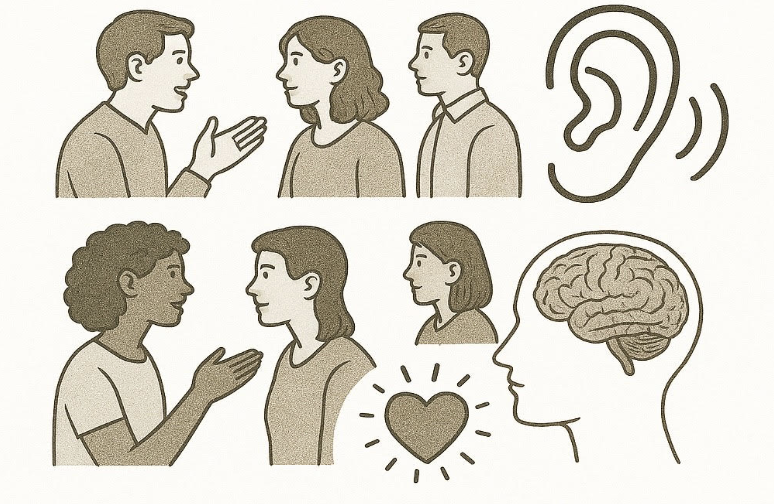
Wikipedia defines freedom of speech as “a citizen’s legal political right to express opinions and ideas according to their personal will without prior censorship or restrictions and without fear of government or others retaliating afterward.” From this definition, it is evident that the freedom of speech not only includes the freedom to express one’s thoughts, but also the freedom to choose how to express them. Today, universities emphasize leadership skills for prospective applicants, and one of the most important traits of a leader is how their speech influences others. This suggests that people often benefit from the free speech of others. Universities also emphasize the importance of students’ critical thinking, which encourages individuals to express their opinions, but morally constrains how they exercise their free speech. Moreover, society’s diversity and complexity demand that we learn to respect others’ freedom of expression, regardless of whether we agree with their content or views. Listening to others’ free expression is both a requirement of the right to free speech and a moral obligation as a member of the community.
From a young age, most children are told about the importance of free speech and the ability to express themselves. During their education, they are encouraged to write essays and give speeches to practice sharing their ideas and viewpoints. As adults, people begin to speak out in the real world. This leads many to live under the illusion that expressing oneself is paramount. However, no one emphasizes that listening to others’ perspectives is equally important. As John Stuart Mill wrote in On Liberty: “He who knows only his own side of the case, knows little of that. His reasons may be good, and no one may have been able to refute them. But if he is equally unable to refute the reasons on the opposite side, he has no ground for preferring either opinion.”
The vast majority of our beliefs stem from collective thinking rather than individual rationality. These beliefs become deeply rooted through collective affirmation. Defending one’s freedom of expression is undoubtedly important, but due to cognitive limitations in self-awareness, people gain more from the free speech of others than from their own.
In his book for lay readers, What Is Life?, Schrödinger, a theoretical physicist from the early 1900s who developed important theories in quantum physics, says that each of us firmly believes that our total experiences and memories form a whole that is unique and unlike anyone else’s. We call this whole “self.” The “self” is essentially a vessel filled with experiences and memories.
However, this “self” clearly has cognitive flaws. These flaws are related to one’s education level, family background, environment, and economic capability, often accompanied by bias and narrow limitations. Steven Sloman and Philip Fernbach refer to this faulty self-awareness as the “illusion of knowledge,” where people overestimate the knowledge or skills they possess. We often think we know more than we actually do, and this overconfidence leads to poor judgment and decision-making. This stems from cognitive biases, fragmented information, social media influence, and a lack of critical thinking. As the division of labor becomes more specialized in society, individuals inevitably live in a knowledge community, where they must adopt a pragmatic attitude toward knowledge they do not possess: to earnestly listen to others’ voices.
There are two ways to gain knowledge: self-practice and learning. Learning is the process of gaining from others’ free speech. The more ignorant a person is, the more absolute their beliefs. To avoid narrow-minded, biased, and extreme views, learning from others’ expressions is undoubtedly crucial.This idea that learning from others expands our understanding has been proven throughout history.
In the 15th century, Copernicus’s heliocentric theory freed natural science from theological constraints, propelling humanity into an era of rapid scientific and technological advancement.
In the 18th and 19th centuries, high maternal mortality due to puerperal fever was curbed after Ignaz Philipp Semmelweis suggested that doctors wash their hands with chlorinated lime before examining patients. Yet history reminds us that progress in medicine has often depended on whether people were willing to listen or not. In the early 20th century, thalidomide, a sedative and anti-inflammatory medication developed in the 1950s, caused widespread birth defects. Frances Kelsey, an FDA medical reviewer, identified issues in the application materials and the emerging birth defects and, under immense pressure from pharmaceutical companies and even within the FDA, rejected the drug’s approval, averting a man-made medical disaster. These show how progress and protection often begin when people are willing to listen to evidence, to reason, and to the concerns of others.
Listening has also driven moral and social change. On November 19, 1863, President Lincoln delivered the Gettysburg Address, declaring the vision of a government “of the people, by the people, for the people,” a vision that endures because generations have listened to its call for unity and democracy. A century later, on August 28, 1963, Martin Luther King Jr., in front of the Lincoln Memorial, painted a vision of racial equality with his “I Have a Dream” speech. Countless people, having listened to his speech, were inspired by his words, eventually leading Congress to pass the Civil Rights Act of 1964, ending centuries of racial segregation. Likewise, in 1866, Susan B. Anthony and Elizabeth Cady Stanton founded the American Equal Rights Association. In 1868, they launched The Revolution weekly to speak for women’s rights and co-authored the 19th Amendment to grant women the right to vote, which was ratified on August 18, 1920. These moments show that social transformation begins not just with the courage to speak, but with the willingness of others to listen and to act on what they hear.
Throughout history, regime changes and institutional reforms have always relied on the emergence of new ideas, and new ideas depend on the exercise of one’s freedom of speech and respect for others’ freedom of speech. The Declaration of Independence, the abolitionist movement, the civil rights movement, and the feminist movement all drew inspiration from progressive ideas to build today’s America. Because of the countless dazzling stars of free expression throughout human history, society has benefited immensely, and human civilization has reached unprecedented heights.
Of course, not all expressions of free speech are beneficial, like executing Socrates under the pretext of eliminating ideological corruption, launching religious wars in the name of ideology, steadfastly believing in geocentrism, rejecting vaccines, and promoting eugenics.
Nevertheless, we must not blindly oppose or silence others just because their views differ from our deeply held beliefs. James C. Goodale, the lawyer who helped The New York Times win the Pentagon Papers case, once said, “Times lawyers never told journalists or editors what they couldn’t publish; they served to defend their right to publish.” British writer Evelyn Beatrice Hall wrote in The Friends of Voltaire, “I disapprove of what you say, but I will defend to the death your right to say it.” An old Chinese saying goes, “Listening to both sides makes one wise; believing only one side makes one blind.” Everything has two sides. We should make judgments only after fully hearing others’ perspectives. Sufficient debate brings our perceived facts closer to the truth, rather than silencing one side in a simplistic and authoritarian way.
However, as mentioned earlier, speech can be good or bad. If we want to benefit from others’ free speech, we must do the following four things:
First, learn to tolerate dissent and respect others’ freedom of speech. Politeness and humility help us avoid cognitive illusions and the trap of believing that only those who agree with us are unbiased and fair.
Second, read the classics and learn to ask questions. Classics provide time-tested insights. However, sometimes reading begins in guesswork and ends in prejudice. To avoid this, we must learn to question. Though doubt may be uncomfortable, certainty is more dangerous.
Third, persist in critical thinking training and improve our ability to analyze and process information. Critically listen and read, systematically evaluate everything we see and hear, and then respond accordingly. Learning to critically listen and read means questioning sources, identifying bias, and distinguishing evidence from opinion, whether assessing a news headline, a viral post, or even an AI-generated statement. Schools and workplaces should encourage debates, fact-checking exercises, and open discussions that teach people not only to think independently but also to listen thoughtfully. By systematically evaluating what we see and hear before responding, we cultivate both intellectual rigor and social responsibility.
Fourth, discern wisely, think deeply, and act resolutely. Intuition belongs to the individual; it exists within our own minds. Thoughtful reflection involves reconsidering what we know personally, what we vaguely perceive, and what others know.
Today, human society faces unprecedented challenges: political corruption, lack of trust among citizens, marginalization of minorities, voter apathy, social stratification, and widening income inequality. History teaches that overcoming these problems requires more than policies or technology; it demands a renewed commitment to freedom of speech and the willingness to listen. We must actively build a web of knowledge, an optimized “cognitive network” for the future. Everyone must learn to ask questions, speak up, practice critical thinking, and respect and defend their own and others’ freedom of speech. Sometimes, others’ views may differ vastly from ours, but it is precisely this diversity of dissent that fills our society with hope and vitality. In an open public space, every voice matters. In an open society, every voice contributes to the whole, and by truly listening to others, we broaden our understanding, nurture empathy, and move closer to genuine social progress.
Sources:
John Stuart Mill. On Liberty. 1859.
Schrodinger, Erwin. What Is Life? Cambridge U.P, 1992.
Sloman, Steven A, and Philip Fernbach. The Knowledge Illusion : Why We Never Think Alone. New York, Riverhead Books, 2017.
Hall, Evelyn Beatrice. The Friends of Voltaire. Good Press, 9 Dec. 2019.
Goodale, James C. Fighting for the Press : The inside Story of the Pentagon Papers and Other Battles. New York, Cuny Journalism Press, 2013.