



















































On December 11, 2025, Time magazine announced “The Architects of AI” as its 2025 Person of the Year. The cover shows eight AI leaders seated on steel beams high above the city skyline. Among them are Tesla CEO Elon Musk, NVIDIA CEO Jensen Huang, OpenAI CEO Sam Altman, Meta CEO Mark Zuckerberg, AMD CEO Lisa Su, Google DeepMind CEO and Nobel laureate Demis Hassabis, Anthropic CEO Dario Amodei, and Stanford professor Fei-Fei Li, often called the “godmother of AI.” Time’s editor-in-chief Sam Jacobs wrote: “2025 is the year when the full potential of artificial intelligence began to roar into view. There is no turning back.”
Four days later, on December 15, 2025, Merriam-Webster announced that “slop” had been chosen as its 2025 Word of the Year, citing its widespread use to describe the flood of low-quality AI-generated content across social media, search results, and the internet as a whole. The dictionary defines “slop” as “low-quality digital content, typically mass-produced by artificial intelligence.” “This word is highly symbolic,” said Merriam-Webster president Greg Barlow. “It represents both the transformative power of artificial intelligence and the complex emotions people feel toward it—fascination mixed with irritation, and even a sense of absurdity.”
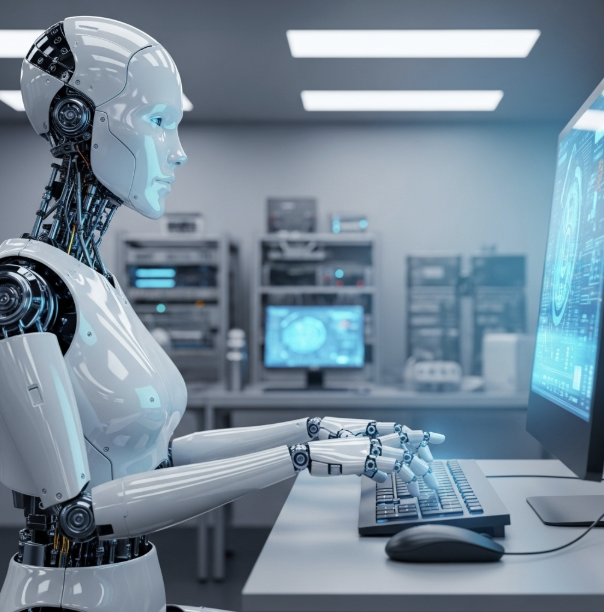
AI is short for artificial intelligence. On the internet, AI is commonly defined as technology that enables machines to simulate human intelligence—allowing them to learn, understand, reason, solve problems, and make decisions. It is not a single technology, but a collection of methods including machine learning, deep learning, natural language processing, and computer vision. Its core goal is to enable computers to perform complex tasks that previously required human intelligence, such as understanding language, recognizing images, generating content, or acting autonomously.
Yet, as Greg Barlow noted, AI brings not only transformation but also endless frustrations. Why, then, should humanity continue to develop AI? I believe the answer lies in the pursuit of maximizing human happiness, and in the fact that the development of AI aligns with humanity’s moral requirements.The renowned German philosopher Immanuel Kant once argued that whether an action is moral should be judged by the intention behind it, not by its consequences, because outcomes lie beyond the full control of human will.
AI possesses interdisciplinary knowledge and can understand complex connections across different fields. As a result, AI can help solve human problems—for example, discovering new treatments for diseases such as cancer and rare illnesses, addressing global hunger, enabling engineering breakthroughs, and inventing things we have never imagined. We will see enormous economic gains that free people from repetitive manual labor and allow them to engage in more creative intellectual work. AI will work alongside humans. Benevolent AI will not usurp humanity; it may become humanity’s last invention. In reality, AI will not replace humans anytime soon. A more likely outcome is that people with digital literacy will replace those without it.
Looking back at human history, every technological revolution has created more jobs than it destroyed. Automobiles put carriage drivers out of work, but they also created new jobs in car manufacturing, repair, and gas station operations. The novelty of AI makes it easy to fear that it will replace human workers. However, we should view AI as a means of augmenting human performance.
Every day, more than 70 million Americans use AI on TikTok to generate visual content and earn income through entrepreneurship; 122 million people use ChatGPT; and renowned mathematician Terence Tao at the University of California uses AI to help solve mathematical problems. Italian artist Str4ngeThing uses Midjourney to design works that seamlessly integrate sculpted golden casts into fabric, recreating the splendor of Michelangelo-era Florence in each piece—where Renaissance grandeur meets modern elegance. Companies such as Collective have developed AI systems capable of analyzing data to rapidly produce highly accurate sales forecasts, a task that traditionally required days or weeks of collaborative human effort. Rather than eliminating sales jobs, AI has given sales professionals more time to focus on what matters most: building relationships, managing clients, and closing deals.
British computer scientist Peter Scott-Morgan, who suffered from ALS, created “Peter 2.0” with the help of AI, allowing him to live his final five years with freedom and dignity. AI selects and reads news and books for people, and recommendation algorithms already shape—and will continue to shape—social media profoundly. Sports coaches use AI to train athletes and devise strategies. Brain–computer interface (BCI) technology brings hope to those with neurological diseases or mobility impairments. AlphaFold’s breakthrough in protein folding has provided an indispensable tool for uncovering the mysteries of life, while AI-powered gene sequencing has helped people confront cancer with less fear. Humanity is now closer than ever to overcoming rare diseases and curing illnesses such as cancer. In Japan, robots in nursing homes not only help elderly residents regain mobility but also alleviate caregiver shortages, greatly improving quality of life and overall happiness. Silicon Valley entrepreneur Bryan Johnson is battling aging; his aging rate is reportedly 30% slower than average, and his biological age is 5.1 years younger. However, these achievements rely on a 30-person expert team costing $2 million annually—far beyond the reach of ordinary workers. With AI-assisted research, however, the cost of anti-aging medicine will inevitably drop. AI will dramatically increase scientific computing power, deepen humanity’s understanding of aging, shorten research timelines, and reduce labor, funding, and equipment costs. One day, rejuvenation may become an affordable dream for all.
Another proof of AI’s ability to accelerate scientific research came in 2025, when the top prize and $250,000 award of the Regeneron Science Talent Search went to Matteo Paz, an 18-year-old high school student from Pasadena High School in California. Paz developed an AI model called VARnet, which he used to identify more than 1.5 million previously unknown celestial objects from massive NASA datasets.
Demis Hassabis, CEO of DeepMind and winner of the 2024 Nobel Prize in Chemistry, predicts that AI will place new drug development on a fast track over the next decade. Drug development cycles could shrink from years to months or even weeks, meaning many diseases could be cured before they become life-threatening. With AI’s exponential growth, diseases will be treated more rapidly, living conditions will improve, and happiness will increase substantially. How could a technology that improves quality of life, extends lifespan, and enhances human happiness be considered immoral?
We all know that genetic testing is crucial to treating human disease. In 1989, leading scientists from the United States, the United Kingdom, Germany, France, Japan, and China proposed the Human Genome Project. From 1990 to 2003, it took 13 years and $3.8 billion to sequence the first complete human genome—30 billion base pairs—from a single white male. By 2023, sequencing the genomes of more than 400 people could be completed in just 2.5 days using the latest equipment. With early AI technologies such as AlphaFold and AlphaFold2, gene sequencing has become automated and intelligent. By 2023, the cost of sequencing a single human genome had dropped to under $100.
One of the most important aspects of AI is that it is beginning to surpass existing human knowledge. Once AI transcends human cognition, it will expand the boundaries of human knowledge and open up an entirely new world. When AI is trained solely on human knowledge, it remains constrained by human limitations. But once AI can generate new knowledge on its own, it may surpass humanity. DeepMind cofounder David Silver has demonstrated this through practice: AlphaGo’s famous “Move 37,” which no human had ever conceived; AlphaZero, which defeated AlphaGo after only 70 hours of self-learning without human input; AlphaFold, which solved the protein-folding problem; and AlphaProof, which can prove mathematical theorems at a level comparable to an International Mathematical Olympiad silver medalist.
On March 10, 2025, Oxford professor Will MacAskill and Fin Moorhouse published an article titled Preparing for the Intelligence Explosion on Forethought. They argued that within the next decade, AI could enable ordinary people to live better lives than today’s billionaires. Human scientific progress currently grows at about 4–5% per year, but with human–AI collaboration, progress could increase by a factor of 25 annually, allowing humanity to achieve in ten years what once required a century. Industrial development has always been constrained by labor, and aging populations and declining birth rates pose major global challenges. AI-powered robots can address these issues, driving explosive industrial growth. AI can also solve medical problems, improve resource utilization, develop clean energy, and support sustainable development. Currently, humans harness only about 0.01% of total solar energy. With AI, capturing just 2% of the sunlight reaching oceans and deserts would yield 100 times today’s global energy supply.
Moreover, AI development not only drives technological innovation and a new industrial revolution, but also creates enormous business and investment opportunities. New opportunities generate new jobs. Through the trickle-down effect, investment leads to job creation, wealth distribution, and shared benefits from AI development.
American computer scientist Edward Ashford Lee believes that humans and machines will grow increasingly interconnected, eventually forming what biologists call an “obligate symbiosis”—a relationship in which neither can survive without the other. Like the long-spurred orchid and the African hawk moth, humans and AGI are destined for obligate symbiosis and co-evolution.
After AlphaGo defeated human players, did humans stop playing Go? Of course not. Humans now use AI to improve their skills, study AI-generated strategies, and practice against AI. Some ask, “What’s the point if we can’t beat AI?” But is winning the only reason humans play? AI is an extension of the human brain. Faced with massive data, human cognitive capacity is limited, and AI can compensate for these limitations.
Claims that AI development is immoral confuse “technological development” with “those who develop or use technology.” Creative destruction has always shaped human society. Like the steam engine, AI is a general-purpose technology poised to rewrite history, and its development naturally involves disruption. But such disruption has accompanied every technological transition since the Industrial Revolution. When steam engines replaced horse-drawn carriages and automated looms replaced hand weaving, did society condemn these technologies as immoral and halt progress? No—never. Technology itself is not immoral; misuse by humans is.
In 1866, Alfred Nobel invented dynamite. It revolutionized construction—tunnels, mines, ports, roads, railways, and sewers. Yet dynamite was also used in warfare, increasing lethality. Killing is immoral and contrary to Nobel’s intent, but no one condemns dynamite itself as immoral. A similar case exists in gene-editing technology. Genome editing has advanced life sciences, from studying gene functions to treating diseases. The technology itself is sound, as evidenced by Nobel Prizes awarded in 2007 and 2020. However, misuse occurs. In 2018, Chinese biophysicist He Jiankui used gene editing on twin embryos to modify the CCR5 gene, claiming to confer HIV resistance. He was widely condemned for violating ethical norms, labeled a “CRISPR rogue” by Nature, and sentenced to three years in prison in 2019.
Thus, what is immoral is not AI development but the misuse of AI. Fei-Fei Li leads Stanford’s Institute for Human-Centered Artificial Intelligence, a name that reflects deep concern for ethics among AI developers and users. Her team emphasizes moral responsibility and insists that AI development must remain human-centered. Kant argued in Critique of Practical Reason that the highest good is the unity of morality and happiness. Today, the ultimate purpose of AI development is also the pursuit of human happiness. Therefore, developing AI is moral: the two are fully aligned in the pursuit of the highest good.