










































A century ago, a man sat on a tree stump under an oak tree at sunset, watching the sun’s diffuse glow behind the hills as he waited for his lover. When she arrived, he leaped up from the tree stump and hid the rose he brought behind his back. There was a tenderness in his waiting, as though love were something sacred enough to devote one’s entire self. Today, that man swipes away your message as he returns to his game of Clash Royale.
The next day, his friends will pat him on the back and congratulate him on his “nonchalance,” a term that has recently gained significant meaning in the digital realm. Just a year ago, many people might not have even known what the word meant, but just like every other concept, social media has stripped it bare and repurposed it into slang, throwing it around with unforgiving dullness. Today, if you’re nonchalant, you’re cool and accepted into the collective. If you’re not, you’re immediately bashed for taking things too personally and too deeply.
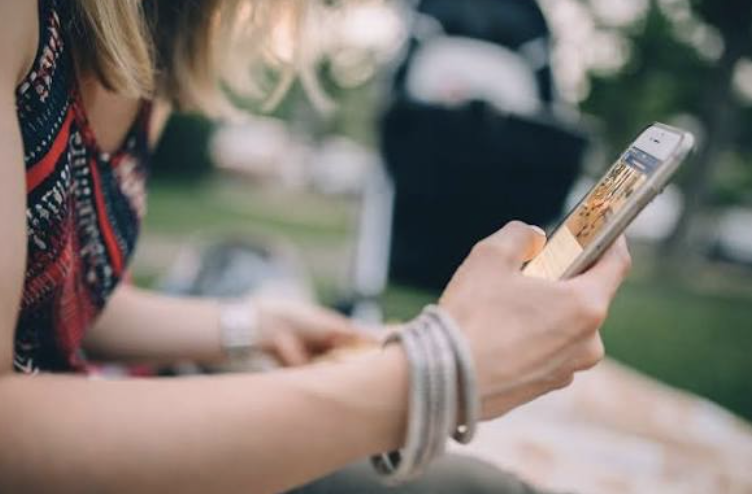
Even if you might not realize it, the phenomenon of nonchalance is everywhere. It’s infiltrated the very roots of social media, simply because the entire concept of an online presence is built upon some variation of “coolness:” the way you pose for the camera by looking away (don’t worry, I do it too), the way you post an achievement with an understated caption, the way you half-swipe on someone’s message so they don’t know you read it. All of this is a reflection of the mindset that social media has ingrained in us. You might attempt to convince yourself that this is all a display of indifference, that you don’t mind what others have to say about you, but is that really the case? No, not really.
Everything we do online, we do for an audience. I can already hear the people with private accounts clacking away at their keyboards and begging to differ, but to those people, I say, “No, you’re not as special as you think.” No matter how few followers you allow into your account, you let them in for the sole reason of viewing your life. Why did you accept their follow in the first place? Although we sometimes like to claim that we post for ourselves, there’s always a secret part of ourselves that knows we’re looking for attention. It’s part of our human nature to crave witnesses to our lives, the good and the bad moments, and to tell people, “This is my life.”
We care about how others perceive our lives on the Internet, so we add filters to our pictures, archive posts that we’ll later unarchive, and spend an hour choosing a fitting caption. We care so much that we’ve started to pretend that we don’t. Just like that, the concept of nonchalance has become the new standard of online performance.
Unfortunately, this concept has also seeped into love and relationships. Everyone knows that person who ignores your message only to post a story ten minutes later. It would be completely unacceptable for them to immediately reply to your message because it would be a disgusting display of affection or emotion. Today, sincerity is a sign of weakness. Regardless of how they feel, it’s better for them to hide behind the wall of feigned stoicism, so they start to withhold their affection for the sake of upholding their own shallow personas. It has reached the point where people are expected to deny their personal expression to the people they love most in order to conform to these societal standards.
In a world hidden behind screens, there’s no more of that vulnerability that is so essential to lasting relationships. The passion, excitement, and intimacy that once defined romance are increasingly out of reach. Instead, we have teenagers, even full-on adults, refusing to express attraction toward their partner. It’s become embarrassing to hug, to double-text (sending another message when the first goes unanswered), or even to admit you care. For some, it’s a symbol of power. For others, it’s their way of protecting themselves and their deeply vulnerable feelings and egos.
Perhaps people think that this is an indication that the standard of love has changed, that this is the new form of romance. But what meaning is there if we can’t take a risk and be emotionally honest? By falling into the trap of nonchalance, we’ve lost the authenticity and vulnerability that hold relationships together. Rather than strong, genuine relationships, we popularize “situationships” and “flings,” labels that don’t require depth or emotional commitment. That puts us in a deadly cycle: if we don’t care about our relationships, then we no longer feel the need to put effort in the first place.
For that reason, there are only a few strong relationships that last nowadays. The actions that were once seen as honorable and romantic are now viewed with scorn. People no longer connect on an intimate level because it’s considered embarrassing to express unfiltered desire. It’s rare to see people surprise their partners with flowers or a heartfelt note. Love is on a rapid downfall, and it’s time to reverse course.
It’s time to ditch nonchalance and bring back yearning. Leave the half-hearted hugs and terse messages in the past. Start being vulnerable, emotional, and sensitive, because those are the traits that strengthen our relationships. Even if you’re not mailing five-page, handwritten letters to your partner every week, you can express your genuine feelings in your own way. Why conceal your affection from those you love the most? Disregard what social media has told you to do or not to do, because your emotional honesty is more valuable than online acceptance. Real life and real love are not nonchalant performances.