

















































Playing a sport professionally is tough. The pressure of winning causes the sport to be a never-ending journey of always striving for better. Athletes go through hours of hard work, training, and discipline both on and off the court. What if there’s an easier alternative to that? What if you could push the human limits beyond training? Enter doping.
Doping is the use of a drug or medication to increase performance in a certain aspect. Whether it’s increasing blood flow to allow the athlete to have greater stamina or granting the athlete more explosive power, doping allows the human body to perform beyond normal human capabilities. Throughout the centuries, there have been numerous doping scandals, ranging from sports like cycling to figure skating. Tennis is also a sport not unfamiliar with doping, as numerous scandals intermingle around this issue.
Simona Halep

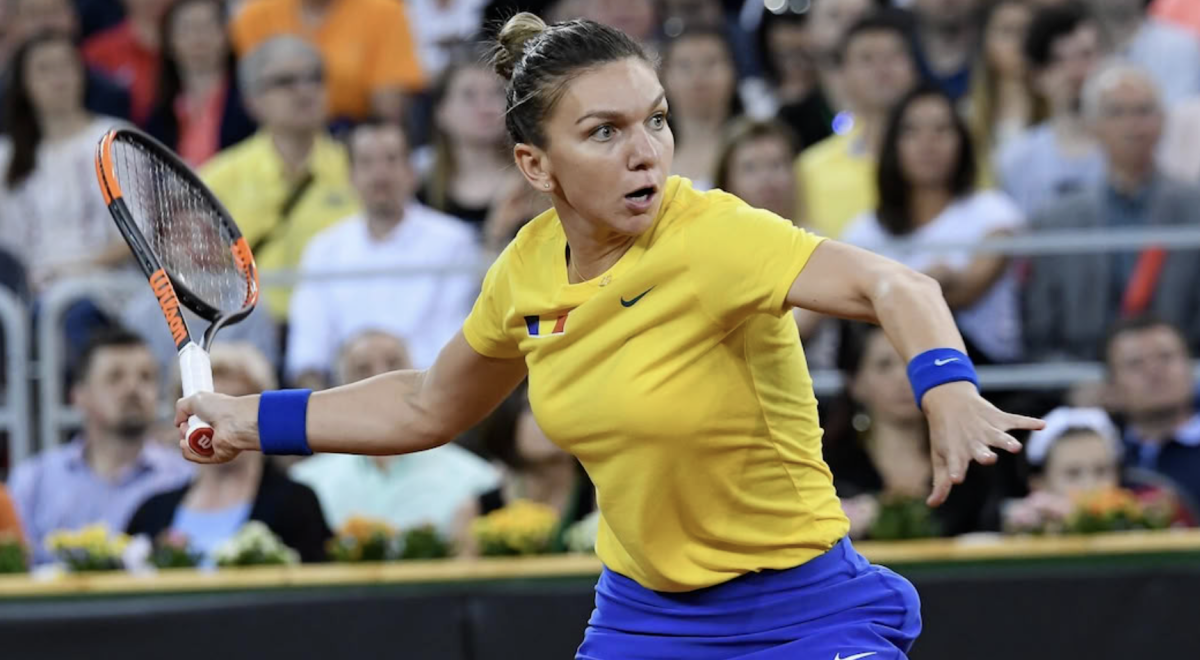
Simona Halep is a Romanian tennis player who started her professional career in 2006. Since then, she has achieved incredible results, including being ranked No. 1 twice and winning two Grand Slams—the 2018 French Open and the 2019 Wimbledon. However, in 2022, Halep’s career took a turn for the worse after facing some controversial doping accusations.
On August 29th, 2022, at the US Open, Halep was randomly selected to take an anti-doping test after losing her match. About a month later, on October 7th, the International Tennis Integrity Agency (ITIA) informed Halep that her test came back “positive for roxadustat, an anemia drug which is a banned blood-doping agent in the same category as EPO (Erythropoietin), increasing hemoglobin and red blood cell production.” Hearings from December 2022 to February 2023 ultimately deemed Halep responsible for doping and sentenced her to a provisional ban. Then, in May 2023, Halep received a second separate charge for doping through “irregularities in her Athlete Biological Passport (ABP).” Angered and frustrated by these accusations, Halep repeatedly defended herself through social media posts stating that she was innocent and did not purposely intend to dope. She cited the reason for her positive drug tests was her use of a Keto Medium-chain triglycerides (MCT) supplement to help with weight loss, energy, and other health concerns. However, despite all her attempts at defending herself, the ITIA decided that “the high concentrations of roxadustat in her samples could not be explained by the low concentration of roxadustat in the supplement containers tested” and sentenced Halep to a four-year ban from competing in professional tournaments.
Not surprisingly, Halep was extremely upset with the decision handed down to her, so on September 28th, 2023, she decided to appeal to the Court of Arbitration for Sports (CAS). After a series of legal battles, on March 5th, 2024, the CAS shortened Halep’s ban from four years to nine months, accepting Halep’s reason for the unintentional ingestion of the drug roxadustat and dismissing the irregularities in her Athlete Biological Passport. Despite this small victory, however, Halep’s career remains significantly harmed by this whole process, as she has been unable to return to competing as well as she did previously.
Jannick Sinner

In March 2024, Italian tennis player Jannik Sinner, the current world No. 2 and former world No. 1, tested positive for clostebol, a banned anabolic steroid, during the Indian Wells tournament. An investigation by the International Tennis Integrity Agency (ITIA) revealed that the substance entered Sinner’s system inadvertently. His physiotherapist, Giacomo Naldi, had applied a spray containing clostebol to treat a cut on his own hand and subsequently provided massages to Sinner without wearing gloves, leading to contamination. An independent tribunal accepted this explanation, ruling that Sinner bore “no fault or negligence.” As a result, while he was stripped of the prize money and ranking points earned at Indian Wells, no suspension was imposed, allowing him to continue competing.
Despite the tribunal’s decision, the World Anti-Doping Agency (WADA) expressed dissatisfaction and announced in September 2024 that it would appeal the ruling to the CAS. WADA seeks a suspension for Sinner, arguing that the “no fault or negligence” finding was incorrect under the applicable rules. Although it may not have been Sinner’s fault, rules were still violated, so consequences should still be applied if WADA looks at this from an objective perspective.
On February 15, 2025, WADA issued Jannik Sinner a three-month ban, effective from February 9, 2025, to May 4, 2025. This decision sparked controversy, with some believing the punishment was fair, while others criticized the delay, calling it unfair. Notably, the timing of the ban means Sinner will not miss the French Open, one of the four Grand Slam tournaments—the highest level of competition in tennis—leading to further debate about the severity and impact of the ruling.
Despite being banned from the tour for three months, Sinner has since then fought back and been successful: climbing up to No. 2 again after reaching the finals of Roland Garros and winning Wimbledon.
Iga Swiatek

The Polish player Iga Swiatek, current world No. 2 and former world No. 1, tested positive for trimetazidine, a prohibited metabolic modulator, later in the year. Swiatek wasted no time finding the reason for her positive test, attributing it to a sleep medication she took. This specific sleep medication is commonly used in Poland but banned around the world. The CAS ultimately deemed Swiatek not at fault, and she accepted a one-month suspension, which perfectly coincided with the off-season, allowing her to participate in major tournaments without interruption. The WADA reviewed her case and decided not to appeal the suspension, effectively closing the matter.
Halep’s reaction to Swiatek and Sinner’s Cases
After the news and decisions of Swiatek and Sinner’s cases, Halep was extremely unhappy with how the players were treated so differently. While her process was dragged out for a long time, from delays to results and decisions being handed out to being unable to return to the professional tour as speedily as she would’ve liked, her process exposed the inefficiencies of the doping investigations. Yet, in comparison, Sinner and Swiatek’s processes were handled and treated in a quick and proficient manner. Some players wonder if there was biased treatment, while Swiatek attributes her readiness to comply as the leading factor in why her case went smoothly. Halep posted many of her opinions on Instagram, being very vocal about this situation. “I sit and try to understand, but I can’t understand something like this,” Halep posted. “Why such a big difference in treatment and judgment? I can’t find, and I don’t think there can be, a logical answer.” This exposes a flaw in the doping handling process, with nonstandard timelines being an issue. Perhaps implementing standard hearing times and a clear process to follow through on doping would clear the air about any bias.
Why is the ITIA hesitant to ban players?
Now, at this point, you may be wondering: why is the ITIA so hesitant to ban the players? Well, having the men and former number one Swiatek and Sinner being banned for doping would heavily discredit the sport of tennis. It may cast a negative light on this sport as people may accuse the top players of being good just because they dope. Additionally, many players would and could accuse the ITIA of not fairly implementing the punishments, because if Sinner is found guilty, the question would not just be whether or not he gets banned, but also how much prize money and ranking points should be taken back, and more largely, whether he even deserves the number one spot or not.
Future Rules and Improvements
While we are unsure where future doping rules for tennis are headed, one thing is for sure. The process of handling these hearings and investigations definitely needs to be sped up and handled in a more efficient manner. Whether it’s false accusations that the player is facing, or the hate towards them after the doping news comes out, this is a problem that can affect the player significantly mentally. Jannick Sinner has been extremely vocal about how this whole situation affected him negatively, like a shadow constantly hovering beside him. While situations like these could never be handled in a perfectly objective manner, and who is at fault may never be known, there could be many improvements regarding this area. The process should be more transparent, efficient, and fair, and testing could be more frequent and targeted, with independent agencies handling analysis and extended sample storage for retesting. Additionally, with the rapid rise of AI, samples could be analyzed with AI to speed up the process. Moreover, hearings must have standardized timelines, neutral panels, and full access to evidence. Players should receive legal and mental health support, along with better education on anti-doping rules, and penalties should differentiate between intentional and accidental violations, offering alternatives like education for minor infractions. All of these reforms could be implemented to ensure justice and fairness.
Sources:
Rothenberg, Ben. “How Simona Halep Won Big at Cas.” Bounces, Bounces, 11 Oct. 2024, www.benrothenberg.com/p/how-simona-halep-won-big-at-cas.
Futterman, Charlie Eccleshare and Matthew. “Jannik Sinner’s Doping Case Explained: What Wada Appeal Means for Tennis.” The New York Times, The New York Times, www.nytimes.com/athletic/5806315/2025/01/10/jannik-sinner-doping-case-tennis-explained/
Michaels, Jake. “What We Know about the Sinner and Swiatek Doping Cases.” ESPN, ESPN Internet Ventures, www.espn.com/tennis/story/_/id/43363975/tennis-australian-open-jannik-sinner-iga-swiatek-doping-cases-faq-questions-next.