











































Will AI make human lives easier, or will it replace humans?
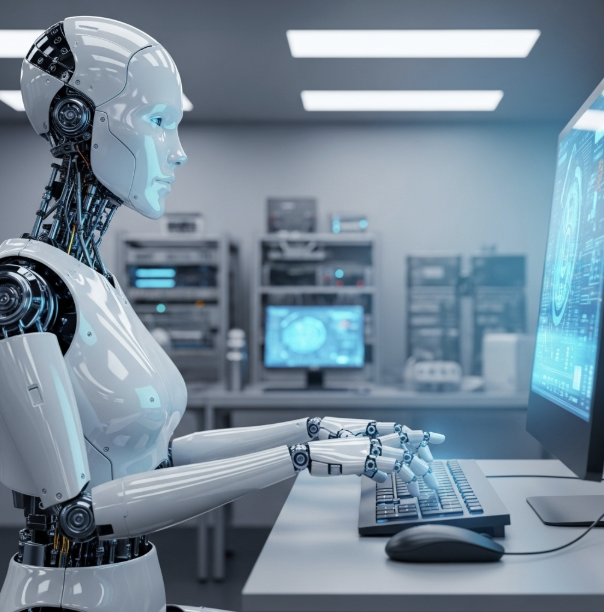
In the past few years, the rapid advancement of AI has left many people pleasantly surprised yet also apprehensive about the future of the job market. While AI chatbots have greatly aided many people in their everyday lives, many are worried that AI will replace the jobs of humans. For instance, the customer service industry has been hit particularly hard by the rise of AI. Many companies now utilize AI chatbots to talk with customers, reducing the need for human customer service agents. However, I do not believe that the rise of AI will necessarily result in mass unemployment and layoffs in the long term; rather, it will simply divert jobs from one industry to another and encourage people to change their workplace behaviors.
First, let us consider the professions of radiologists. With the rise of AI, many people such as Nobel prize winning Geoffrey Hinton predicted that radiology would soon become an altogether obsolete profession because, supposedly, AI would be able to handle image recognition tasks with much greater efficiency than a human. However, this prediction proved to be greatly exaggerated and influenced by irrational AI-phobia. Radiologists still exist today, and they have not experienced significant layoffs; they have simply changed how they perform their jobs and, in fact, now utilize AI to increase their own efficiency. Many radiologists now use specialized AI assistants to help identify whether a patient has cancer based on the patient’s X-ray scans. Rather than AI replacing radiologists, what has in fact happened is that the radiologists who use AI to increase productivity have replaced those who did not adapt to AI. Generally, new technologies that are rumored to “replace humans” always incite mass panic. For instance, the rise of steam-powered machines did not completely deprive artisans of jobs; on the contrary, they found new jobs in the newly built factories. Steam engines and new machinery heralded the industrial revolution, drastically increasing employment rates; similarly, AI will also herald in a new industrial boom rather than causing the predicted mass unemployment.
Secondly, the fears of AI completely replacing certain industries in the near future are unfounded. As many people have noted with even top-performing AI models, these models sometimes hallucinate, stating factually inaccurate, made-up information. If AI were allowed to completely replace humans, the results would be disastrous, and companies would face mounting monetary loss caused by client dissatisfaction. Humans are still unique and different from AI in that they quickly learn and improve from past mistakes, whereas AI is not so adaptible. The companies still require actual human employees to be there to verify the work of the AI. Furthermore, AI is incapable of handling nuanced decision-making and struggles significantly in creative fields and tasks requiring human empathy. These limitations on AI provide humans with leverage in the job market; jobs that require distinctly “human” characteristics will always be reserved for humans. Hence, humans will not be fully replaced by AI in the foreseeable future.
Lastly, even if AI ever develops to the point where it has high enough accuracy to rival that of humans and is capable of replacing certain human jobs, this will only result in a shift in the job market rather than the complete replacement of humans by AI, as Wharton experts Valery Yakubovich and Peter Capelli predict. There are many well-founded fears that certain jobs like clerks, receptionists, proofreaders, telemarketers, etc, will be replaced by AI. However, there are many jobs that AI will never be able to replace; on the contrary, the development of AI will only create a new industry. If AI becomes widespread among the big companies, it is only logical that the companies must have employees who are tasked with maintaining and improving the AI model. As has always happened in history, people must learn to specialize in new areas and adapt to the new situation; those who are unable to do so will be left behind, whereas those who can adapt will thrive in the new situation.
AI will improve the quality of our lives and increase our productivity. Despite the initial turmoil that it has caused in the job market, AI will not cause mass unemployment in the long run. Just as steam engines caused the first Industrial Revolution and the rise of electricity led to the Second Industrial Revolution, AI will pave the way for a third industrial revolution and increase the quality of our lives.
Sources:
https://knowledge.wharton.upenn.edu/article/ai-cant-replace-you-at-work-heres-why/#:~:text=Even%20if%20they%20built%20it,technology%20on%20a%20large%20scale.