



















































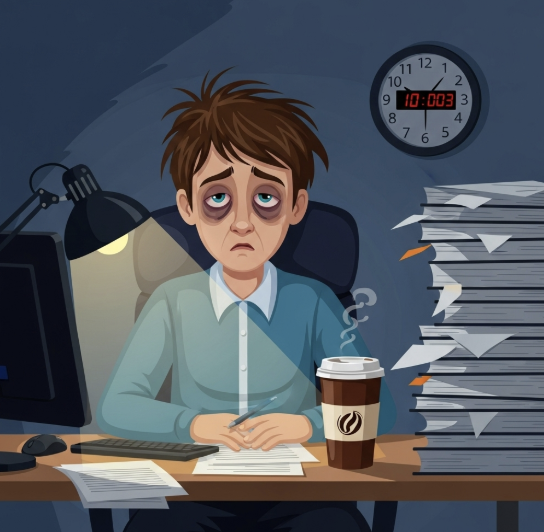
At some point, we BISV students have all said this: “I’ll just finish this assignment and sleep in a bit.” Suddenly, you find yourself up at 1 a.m. every night, convincing yourself that tomorrow, you’ll definitely go to bed earlier and that your body can handle it because it’s “just a few hours of lost sleep.” What could be the harm? You’re maximizing your 24 hours at peak productivity. You feel fine the next day anyway.
Well, the problem is that your brain keeps score of every hour of sleep that you’ve lost.
Sleep isn’t just shutting the brain off; it’s when the arguably most important functions of the brain perform the critical maintenance that keeps us going in the daytime. During deep sleep, also known as slow-wave sleep, neural connections formed during the day are strengthened. These communication pathways between neurons are connections that are formed whenever you learn something new, whether it may be a new concept at school or a new skill. While you’re fast asleep, your brain is hard at work, reinforcing the most important pathways to consolidate your memory. Ever wondered why the material that you can’t seem to memorize late at night suddenly makes so much more sense in the morning? Well, now you know. This is why sleeping after studying late at night often leads to better recall than staying up all night cramming.
At the same time, the brain cleans up metabolic waste, which is the leftover chemical byproducts that accumulate when neurons are active. When we get enough quality sleep, the fluids between neurons are able to flush out the waste molecules in a process called the glymphatic flow. Why is this important, you may ask? One of these wastes is called beta amyloid, which is a protein whose buildup is associated with neurodegenerative diseases. According to the American Brain Foundation, this protein has been found to accumulate in people with Alzheimer’s. How scary… This shows why getting enough sleep is so important—not just for feeling rested, but for giving the brain time to clear out harmful waste before it can build up and interfere with long-term brain health.
When individuals don’t get enough sleep, especially deep sleep, where memory consolidation, glymphatic flow, and other essential processees occur the most efficiently and the first to be lost with sleep deprivation, both these processes are disrupted. Memories don’t fully consolidate, which can manifest in daily life when you forget concepts from the day before or need more time to understand material that would normally be a piece of cake. Meanwhile, waste products are unable to be flushed out of your system. This is the cause of brain fog, slow reaction time, and difficulty focusing, which you have no doubt noticed as common effects of sleeping late. Simple tasks are harder, and mistakes appear more often. It’s not because you got dumber overnight, but because your brain can’t keep up with your body or finish its essential maintenance. Picture trying to play a video game on a phone that has dozens of apps running in the background and never fully charges. It may function, but over time, you will notice lag, overheating, and crashes that weren’t previously there. Sleep is the brain’s only opportunity to close all those apps, clear out the useless files sitting there taking up space, and prepare for the next use. Without sleep, the brain keeps going, but at a high cost.
I, too, am guilty of ignoring my body’s needs from time to time due to the demanding nature of BISV, cramming for tests until 3 A.M., and barely getting enough sleep to function the next day. And while the previously mentioned effects were definitely noticeable from time to time, what really showed me the severity of sleep deprivation occurred during dance practice after a night of just over 3 hours of sleep. At first, I didn’t know that something was wrong, but my body definitely did. As I attempted a move that I had done hundreds of times before, something felt off. My balance was completely unstable in a way that it had never been before, and I kept falling in ways that my muscle memory should have prevented. It was unsettling to experience a disconnect between my mind’s clear instructions and my body’s contradictory response.
Neuroscientists explain this phenomenon through disrupted coordination in the cerebellum, which is the area of the brain that controls balance and movement, and the motor cortex, which is responsible for planning actions. Sleep deprivation interferes with that connection, which slows communication and reduces the brain’s ability to correct errors. As a result, movements that are normally automatic begin to feel unfamiliar and unstable, and the body reacts too late to prevent mistakes like stumbling or falling. When sleep-deprived, the brain struggles to process sensory feedback from the body quickly and effectively, making it hard to respond to sudden changes. This explains why my falls felt unnatural: my muscle memory was still there, but the system that stabilized movements wasn’t functioning properly. Sometimes, these effects sneak up on you from behind, and by the time the consequences become obvious, the damage has already been irrevocably done.
People often say that you can go into “sleep debt” during the week and simply make up for it over the weekend. Unfortunately, the brain doesn’t work like that. Sleep debt refers to the cumulative effect of not getting enough sleep over time, but unlike money, you can’t repay it all in one go. When you miss sleep, you’re specifically missing deep sleep and Rapid Eye Movement (REM) sleep, which are tied to memory consolidation, emotional regulation, and motor coordination. The stages of sleep occur in a precise order every night, so once they’ve been skipped, they can’t be fully recovered later. One may think that sleeping in on weekends is the perfect solution to solving all your problems. Missed out on 6 or 7 hours during the week? No problem! I’ll just sleep in until 3 P.M. on Saturday to fix that. However, that approach creates a new problem. Sleeping in drastically disrupts your circadian rhythm, the body’s internal clock that tells your body when to feel awake and when to feel tired. This shift, which is referred to as “social jet lag,” makes it harder to fall asleep on Sunday night, which leaves you tired again when the week starts, creating an endless cycle of exhaustion that eventually spirals out of control. Even more misleading is the feeling of recovery. While sleeping in may reduce fatigue, studies show that cognitive performance, such as focus and decision-making, often remains impaired after chronic sleep loss. You may feel better, but your brain is still operating below its full capacity. Therefore, while weekend catch-up sleep is something many of us rely on to alleviate exhaustion, it doesn’t undo the neurological effects of missed sleep. The only real solution is consistency and giving the brain enough sleep every night, not just when there’s time for it.
Lastly, but most importantly, BISV students can often be seen holding energy drinks during passing periods, whether it be a Monster drink or one of those caffeinated drinks from the vending machine. Is caffeine really the solution, though?
Most energy drinks rely on high doses of caffeine, which works by blocking adenosine, a chemical that builds up in the brain throughout the day and creates the feeling of sleepiness when bedtime approaches. Caffeine blocks that chemical, preventing you from feeling sleepy and thus making you more alert. However, that adenosine doesn’t magically disappear. It continues to accumulate in the background so that once the caffeine wears off, the floodgates open, and the adenosine comes pouring out, making the crash often even worse than the original fatigue.
Another issue with energy drinks is that they flood the body with stimulants and sugar, causing spikes in adrenaline and heart rate. This can cause a sense of euphoria and temporary focus, but it’s artificial and short-lived. The brain is being forced to stay alert without the restorative processes that are essential for it to truly recover. Over time, this may lead to increased levels of anxiety, jitteriness, difficulty concentrating, and even frequent headaches.
Yet another issue is timing. Caffeine can stay in the brain for six to eight hours, sometimes longer. Drinking an energy drink in the afternoon or evening delays melatonin release, making it harder to fall asleep at night. This directly cuts into deep sleep and REM sleep, reinforcing the cycle of exhaustion and dependence on caffeine the next day. Maybe even more dangerously, energy drinks create the illusion of functioning. You may feel awake enough to get through classes, practices, or homework, but reaction time, judgment, and coordination remain impaired. The brain is alert, not restored. This is why relying on energy drinks often leads to more mistakes, not fewer.
At BISV, and at any high school, really, running on little sleep is certainly nothing new, and to some, it’s almost like a badge of honor as they flaunt their new record as something impressive. But science makes clear the fact that sleep is never optional. Cutting corners on sleep doesn’t make us more productive; it just delays the consequences until they begin to show up in our grades, our bodies, and more. Prioritizing sleep isn’t about doing less work and being less productive, but about giving our brains what they need to function. Sometimes, the most productive thing you can do is simply to go to bed.
Sources:
American Brain Foundation. “Why Sleep Matters for Brain Health.” American Brain Foundation, www.americanbrainfoundation.org/why-sleep-matters-for-brain-health/. Accessed 13 Dec. 2025.
Integrity Physio. “Lack of Sleep and Balance Problems.” Integrity Physio, www.integrityphysio.com.au/blog/lack-of-sleep-and-balance-problems/. Accessed 13 Dec. 2025.
LaMotte, Sandee. “Weekend Sleep Can’t Undo Damage of Poor Sleep During the Week.” CNN, 28 Feb. 2019, www.cnn.com/2019/02/28/health/weekend-sleep-weight-gain-study/index.html. Accessed 13 Dec. 2025.
Sisel, Kara. “Coffee Doesn’t Help Sleep-Deprived Brains with More Complex Tasks, Research Finds.” Daily Coffee News, 3 June 2021, dailycoffeenews.com/2021/06/03/coffee-doesnt-help-sleep-deprived-brains-with-more-complex-tasks-research-finds/. Accessed 13 Dec. 2025.