





























“What do you mean you hate jazz?”
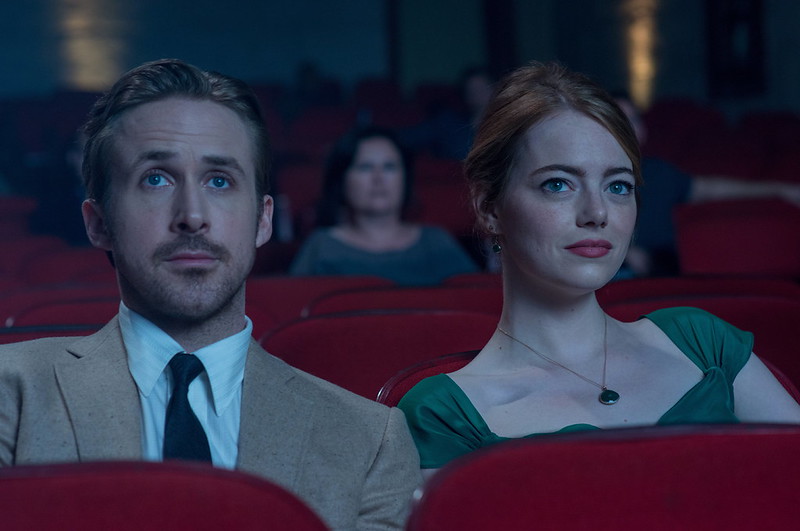
I couldn’t have related more to that one scene in La La Land where Sebastian asks Mia, “What do you mean you hate jazz?” I can literally hear the disbelief in his voice in that moment when he realizes that there’s a difference in their relationship too great to be resolved. HOW COULD HIS GIRLFRIEND-TO-BE NOT LIKE THE ONE THING HE’S PASSIONATE ABOUT IN HIS LIFE??? Oh, Sebastian, I feel your reaction deep in my soul, for I, too, have always been surprised to find jazz consistently ranked among the least-listened-to music genres year after year.
It’s been disheartening to see jazz slowly fall to the bottom of every music ranking list. In 2024, jazz and blues came in among the five genres people listened to least in a survey conducted by Statista Consumer Insights. It may have seemed like a coincidental anomaly had it been for a single year, but it’s a recurring, annual phenomenon. Do people really hate jazz that much?
I know I can’t speak for everyone, but I think many claim to dislike jazz because they’ve simply misunderstood the concept behind the mysterious genre of music. We’ve seen this anti-jazz attitude lightly touched upon in numerous movies, La La Land being just one example. In many other movies where jazz is not so thoroughly explored from the performer’s point of view, characters often treat it as chaotic or inaccessible. In The Talented Mr. Ripley, Mr. Herbert Greenleaf denounces his son’s musical taste and lavish lifestyle, claiming that “Jazz is just noise, just an insolent noise.” That oversimplification pretty much sums up the public’s perception of jazz: nothing but disorderly sounds.
The History of Jazz
To any unfamiliar ear, the amalgamation of spontaneous notes may seem chaotic and unsophisticated, but reducing jazz to “noise” ignores the rich cultural history from which it emerged. The music we listen to without much thought today in fancy jazz clubs was once a powerful form of expression and rebellion. Emerging in New Orleans from the informal style of blues music and the abbreviated rhythm of ragtime, jazz served as a national symbol of liberty and hope during the tumultuous era of the early twentieth century. It was a deliberate product of the creative expression of African Americans, blossoming from the oppressive conditions of segregation and racial discrimination. The improvised work songs that brought them together and consoled them from subjugation eventually contributed to the development of jazz music. Jazz evolved along with the twentieth century’s most significant events, transforming into a vocalization of the disregarded demands of the marginalized.
As the genre became accepted by musicians outside of the African American community, it gained a favorable reputation for its diverse soundscape. Characterized by its fluidity and rhythmic energy, jazz thrived as a lively expression of the nation’s youthful optimism, attracting people from all classes and cultures to perform together in ensembles. These new practitioners brought new interests and styles into the realm of jazz so that it flourished from the influences of dance orchestras and European harmonies.
Soon, jazz became more than just a genre. It became a vehicle of personal identity, especially as great musicians like Sidney Bechet and Louis Armstrong popularized individual solos. They mastered the ability to lead their own improvisations with a single instrument and increased activity in recording studios. This created opportunities for a massive wave of aspiring musicians while also bringing jazz out to listeners across the country through remote radio broadcasts. Just like that, jazz became a kind of cultural activity for Americans as jazz stars rose to fame and pioneered a new celebrity musician culture. It was exactly this type of stardom that propelled jazz into the mainstream and made it visible to the public, as individual vocalists began performing at nightclubs and concert halls to eager audiences.
We still see these jazz clubs scattered throughout the country, but they’re nowhere near as prominent as they once were. There’s really no one to blame for this. There was no single catalyst event or unfortunate musician that led to the downfall of jazz. Rather, it was a gradual accretion of events that culminated in the genre’s diminishing popularity. These events, like many other disruptions at the time, were likely a product of World War I. As musicians were drafted and performances halted, the nation saw a decline in jazz production. What had once been a loud and remarkable musical sensation gave way to a quieter existence, characterized by niche variations and smaller, often experimental bands.
As refreshing as it was to see new styles emerging from the unique signatures of different artists, it was also destructive to the status of jazz as a single, sustainable genre. The assimilation of divergent subgenres made it harder to define this elusive musical identity that already had no concrete definition. Stacking multiple forms of music into branches like “cool jazz,” “West Coast jazz,” “soul jazz,” and “free jazz” ultimately diluted the genre so that there was no longer a widespread notion of it for the public to hold on to. With time, interest faded into the ignorance we see today.
Why People Dislike Jazz
Since then, jazz has remained relatively dormant, surviving in hotel elevators and lobbies or in dimly lit jazz clubs tucked away in city street corners. It has become a misunderstood genre, misread for its seemingly disorderly and messy sounds.
While I certainly can’t relate to all of this anti-jazz sentiment, I have made an attempt to understand the complaints of those who hold less favorable views to jazz. I have scoured the Internet for articles and discussion forums (basically just Reddit) for reasons why people hate jazz, and what I discovered is that most people who don’t listen to jazz do so because they can’t seem to “click” with the music. They find it difficult to keep up with the syncopated notes that fall into no real melody.
And honestly, I can’t blame them. It takes a certain perseverance to listen to and appreciate jazz for what it is: performance. Unlike the traditional classical pieces or even the energetic pop songs people listen to on Spotify today, jazz is less about harmonious story arcs than about the presentation of spontaneous improvisation. Without the poetic complement of vocals or the easy musical flow of most popular music, jazz is left to stand on its own through raw instrumentation, and it takes training to develop a taste for this kind of abstraction.
Why People Shouldn’t Dislike Jazz
Some might find this type of sophistication in music to be entitled and annoying, but I find it promising to know how jazz is unrestrained by rigid structure or fixed notation. As long as one knows the fundamentals, they are free to make any piece their own by adding an altered chord or using a slide to modify the original melody. This flexibility makes jazz personalized for both the performer and the listener. Regardless of whether you are playing wildly on the stage or swaying your body to the rhythm in the crowd, you will always be engaged in the present. One moment you’ll be following the euphony of the ensemble, and the next you’ll be brought in a different direction as another musician decides to break off into an improvised solo.
You’ll never know what’s coming next, and that’s the beauty of jazz. Once you learn to tune in to the contribution of each seemingly accidental note, the improvisation will keep you constantly intrigued. Once you put your headphones on and close your eyes, you’ll hear the thrilling symphony of instruments flowing into your ears. It might all seem uncoordinated and sporadic at first, but everything will click once you begin piecing the sounds of each instrument together into a unified composition. Treat jazz as an experience more than a musical formula, and it will eventually all make sense.
Sources
Buchholz, Katharina. “All That Jazz … Nobody Is Listening To.” Statista, 16 August 2024, https://www.statista.com/chart/32866/least-listened-to-genres/?srsltid=AfmBOopdQGbhELzR49yS2QquDI8ncyNuZ1_4yxEnfqIcXxcMO2F0euap. Accessed 27 January 2026.
Camerota, Christian. “Does Jazz Music Need Star Power?” Harvard Business School, 23 January 2017, https://www.hbs.edu/news/articles/Pages/jazz-music-deshpande.aspx. Accessed 28 January 2026.
Hasse, John Edward, and Bob Blumenthal. “Jazz.” Smithsonian Music, March 2016, https://music.si.edu/story/jazz. Accessed 26 January 2026.
“Jazz: Love it or hate it?” BBC, 30 April 2015, https://www.bbc.com/culture/article/20150430-jazz-do-you-love-it-or-hate-it. Accessed 26 January 2026.
Levine Music. “A Brief History of Jazz.” Levine Music, 22 September 2022, https://www.levinemusic.org/a-brief-history-of-jazz/. Accessed 26 January 2026.