















































A couple of weeks ago, I wrote an article comparing pick-me girls to performative males (a little not-so-shameless plug here), but if I’m being honest, I didn’t go into enough depth. I want to redeem myself here by revisiting that idea, specifically the performative male and what he indicates about who we are as a society and what we value.
In fact, society has already done most of the talking for me, because from when I first wrote that article, the hype around the performative male epidemic has begun to subside, leaving us with remnants of what used to be an entire movement: Labubus strung haphazardly on backpacks, tote bags lying untouched in corners of the house, baggy jeans that were too big to ever wear in the first place draping over clothes hangers. Like every other trend, it’s gotten old and overused. It now looks like a desolate, abandoned battlefield. What were they fighting over on this battlefield in the first place?
Women. Of course.
How to Make Women Like Me?
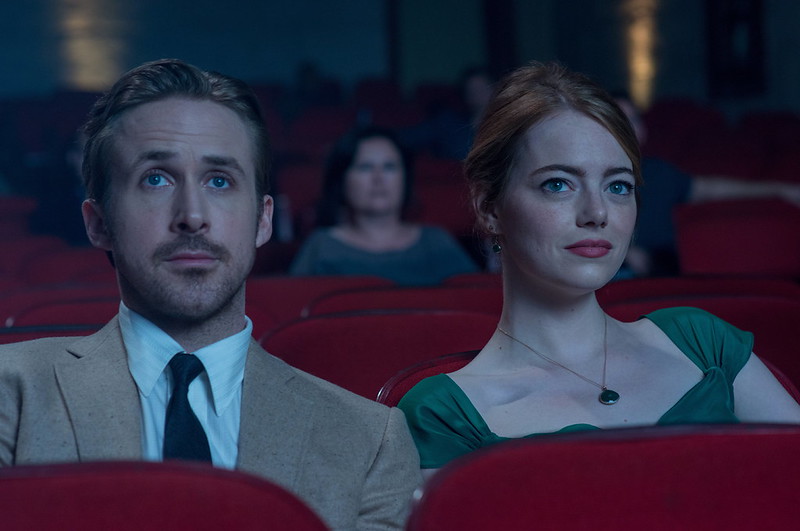
Performative males’ primary intention is to appeal to the so-called “female gaze.” The concept of the female gaze was a response to the “male gaze,” a term coined by feminist film theorist Laura Mulvey. In her 1975 essay “Visual Pleasure and Narrative Cinema,” Mulvey describes how the male gaze “projects its fantasy onto the female figure,” most traditionally through the lens of male filmmakers. If we consider this definition, the female gaze would describe the projection of women’s fantasies onto the male figure. This fantasy is what performative males seek to recreate through their wide-leg jeans and record collections.
Women’s standards for men are ever-evolving, forcing men to adapt in various ways throughout history. Today’s beauty and “husband-material” standards are drastically different from what they were just 50 years ago. We could trace our discussion of gender roles back to prehistoric times, but for brevity and immediate relevance to our lives, I’ll stick to the evolution of women’s relationships with men over the past century or so.
Prior to World War II, women’s roles were mainly confined to the domestic sphere. The patriarchy had shaped their lives, and the Industrial Revolution continued to emphasize men’s ability to be a reliable provider. These were the times of traditional masculinity: physical labor, afternoon cigars, and dingy taverns. During these difficult times, when survival was not a promise but a luxury, many women were given no choice but to rely on male providers for financial stability. This ingrained the dominating, patriarchal image of men in society’s head.
Several decades later, as more women entered the workforce, they realized that they could contribute to society and provide themselves with some degree of security in their lives. Although they were often low-paying jobs, they nonetheless gave women a sense of control over their roles. From there, relationships shifted to focus on emotional understanding and the pursuit of equality between men and women. Women wanted to return home from an exhausting day of work to a loving husband who would listen to her as she collapsed into his embrace, not someone who lectured her about putting dinner on the table.
Ditching Masculinity for Femininity
It’s this change in values and desires that has prompted men to reinvent themselves. Each era brings a different ideal along with it, and today’s just happens to come in the form of matcha drinkers and quarter-zips. Rather than the rigid, masculine image that was once carved into society’s expectations, emotional intelligence, fashion, and being able to understand women are now becoming the new attractive qualities, simply because traditional masculinity by itself no longer works. In a way, men are using more feminine qualities to attract women by expressing a shared understanding of the female condition.
Men, particularly those who are liberal and left-leaning, have become more comfortable experimenting with femininity, and they have begun to shed the heavy skin of what people like to call “toxic masculinity.” Today’s performative male is a subtle reflection of this cultural shift, which finds itself represented through the feminization of their aesthetics and self-presentation. The baby tees and feminist literature are responses to the current political climate that permitted the overturning of Roe v. Wade. By positioning themselves as allies who sympathize with women’s struggles, performative males attempt to indirectly display their political and moral stances through their actions and sense of fashion.
Everything’s the Same
Regardless of which era or political group you look at, however, one thing remains clear: many transformations in the male identity are twists on the “performative male” that derives from men’s perception of a woman’s vulnerability and naivety. Although performative males pride themselves on breaking gender norms and conforming to the female gaze, they’re really not doing a good job. After all, the whole “down with the patriarchy” costume doesn’t really work when the majority of the performative male population consists of cis, heterosexual, white men.
As much as performative males try to set themselves apart from other men, they still play into essentialist desires and ego in their own way. They’re almost comparable to the “Top Gs” who loyally abide by Andrew Tate’s messages and lifestyle. While these two types of men may seem drastically different in their style and values, they’re just two sides of the same coin, both trying to prove their worth through the performance of gender while fashioning an identity out of women’s perceived desires. Both are responses to evolving standards and social expectations. Performative males are the modern models who use the allure of sympathy and a soft persona to gain women’s trust and validation. In reaction, manosphere Tate fans amped up on cigars and the dominance of hyper-masculinity. In both cases, the performance is a result of feeling insufficient and incompetent, forcing them to reinvent themselves to be more desirable in the eyes of women.
At the end of the day, I don’t think either side will win. In fact, performative males are already diminishing in popularity and becoming a source of memes and online discourse. Meanwhile, more and more people are realizing just how absurd the Tate mindset is. With that, you have both sides on a rapid decline.
It’s rare for social media to recognize a trend’s absurdity and criticize its own cringe, so when it does, you know the situation is really bad.
Sources:
Berman, Eliza. “This Is How Women Once Described the Ideal Husband.” Time, 7 May 2015, https://time.com/3829703/ideal-husband-1956/. Accessed 19 November 2025.
Ciorba, David. “What the ‘performative male’ says about us.” Student Life Newspaper, 4 September 2025, https://www.studlife.com/forum/2025/09/04/what-the-performative-male-says-about-us. Accessed 12 November 2025.
Gershon, Livia. “The Rise of the Domestic Husband.” JSTOR, 7 September 2023, https://daily.jstor.org/the-rise-of-the-domestic-husband/. Accessed 20 November 2025.
Jackson, Lauren Michele. “The Invention of “the Male Gaze.”” The New Yorker, 14 July 2023, https://www.newyorker.com/books/second-read/the-invention-of-the-male-gaze. Accessed 13 November 2025.
Muza, Tsitsi. “Are Men Becoming more Feminine?” Medium, 25 January 2025, https://tsitsivmuza.medium.com/are-men-becoming-more-feminine-c55cc6570dcc. Accessed 14 November 2025.