




































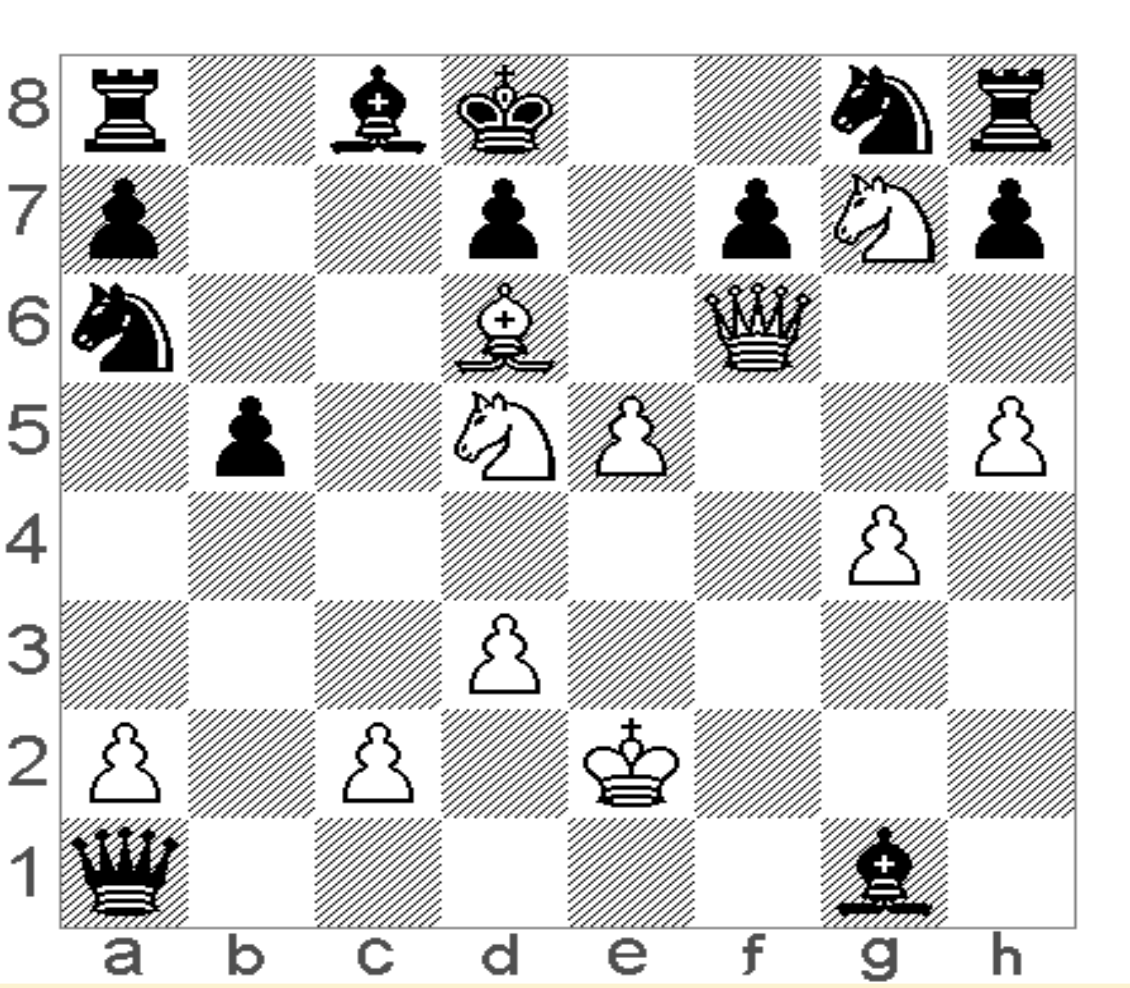
Chess is a very complicated game, emphasizing both positional and tactical play. But sometimes, the most beautiful part of chess is its tactics. That’s what the goal of chess puzzles is: find the tactic that allows you to win material or deliver a forced checkmate. They are very fun, provided you know what you are doing, which is what I’ll explain here.
I’d like to first discuss common mating patterns. First is the back-rank mate, where the king is blocked by his own pawns and cannot escape the first or eighth rank. Then, a queen or rook will deliver a check on these extreme ranks, resulting in a checkmate. This is a very basic mate that is often seen in the first few puzzles on chess.com. Beyond this, many mating puzzles normally hinge on some sort of battery. A battery is essentially two pieces that move similarly together, protecting each other and delivering an attack. For example, a queen and a rook will be a battery when they attack along a file or rank, or a queen and a bishop attack diagonally. Normally, when such a pattern appears, the king is again on the back rank. The queen will attack, preventing the king from moving along the back rank and to the second or seventh file, and the king cannot take the queen because it is protected by the bishop or rook. The final, most common tactical pattern is a pin, whereby a piece is prevented from moving because a more valuable piece would be exposed to attack if it did. This is useful in many forms of checkmates, as a piece which is pinned to the king is unable to capture a piece that is delivering check.
Speaking of pins and skewers, they mostly show up in the next kind of tactic: winning material. Pins prevent a piece from escaping the threat of capture because they would leave another piece completely undefended. This allows you to capture some amount of material basically for free. This is also true for the pin’s counterpart, skewers, which involves a higher value piece in front of a lower value piece. In addition, there is a specific subset of skewering that is of particular interest, where you check the opposing king with another piece behind it. This forces the king to move out of check, allowing you to take the piece behind it. Another prominent tactic is known as the “fork,” which attacks two pieces at once.Of particular note is the king fork, where you simultaneously give check and attack another of the king’s entourage. In a similar spirit, there are also discovered attacks. The most basic discovered attack works like this: an opposing piece “pins” or “skewers” two of your pieces, except the piece in the front checks the opponent’s king! Then, as they have to escape check, you can take the valuable piece that was pinning your original pieces, which is normally a queen. Deflections are also valuable to understand, whereby you force the sole defender of an opposing piece to move away from its defensive role, allowing you to now take the undefended piece. Finally, there are mating threats, where you threaten to perform a forced checkmate if they don’t move one of their pieces into a compromising position, allowing you to eventually win the exchange. More advanced puzzles combine these ideas and make the solution less and less obvious, but these core tenets of how to win material are the foundations of these puzzles. These simple ideas make for some incredibly fun puzzles, where your exploration of the puzzle board will lead to a very beautiful solution. If you wish to see the beauty yourself, you should do the puzzles yourself, whether on chess.com or lichess.org. They’re also very short, so you can play them when you have a small scrap of spare time, like waiting in line or when you don’t feel like locking in for a few minutes, especially if it’s during class. As soon as the teacher isn’t looking at your computer screen, just play a chess puzzle. You’ll be done before the teacher looks at your screen again. Just remember not to hang your queen or blunder checkmate.